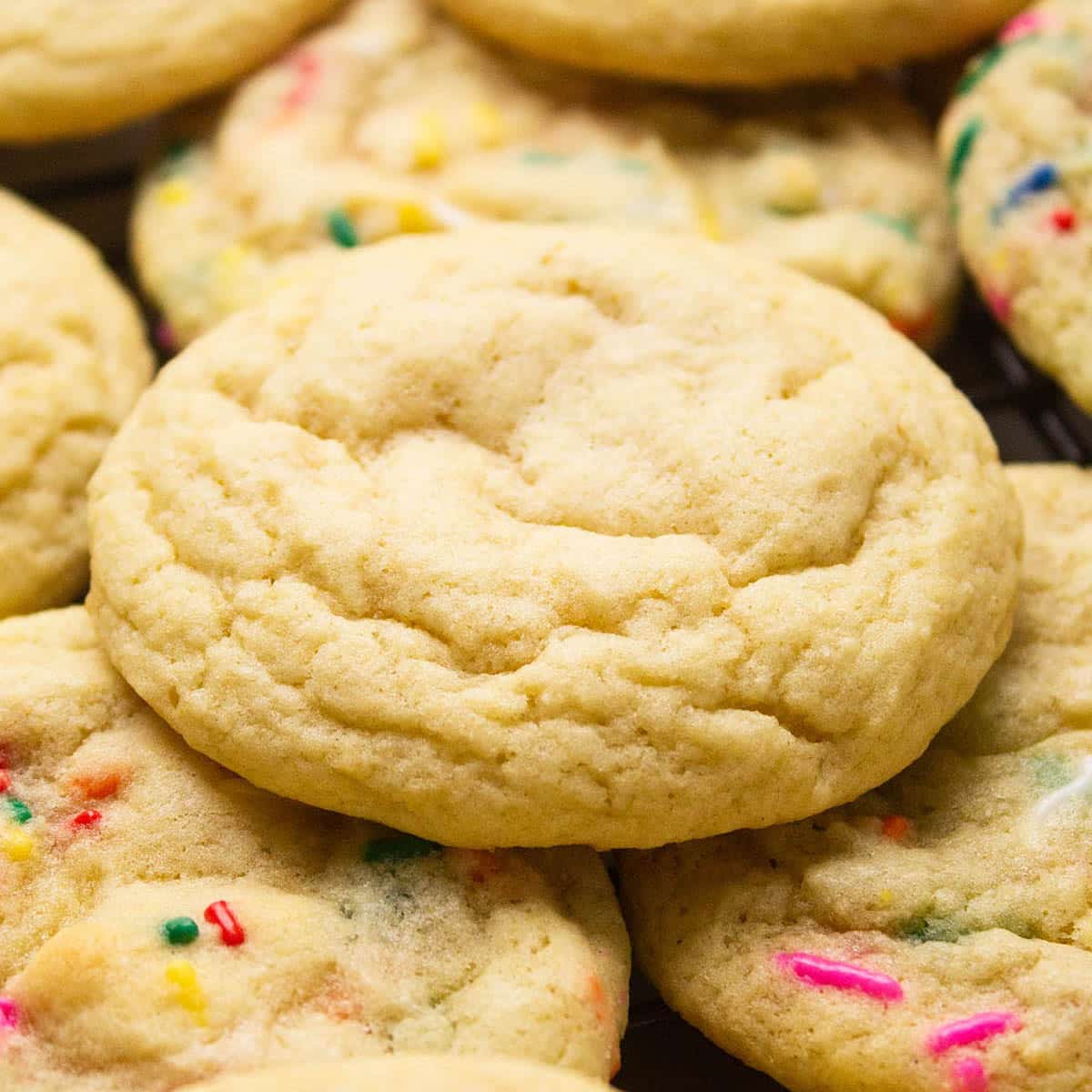
Soft Sugar Cookies: Spreading Dough or Perfect for Decorating?
The humble sugar cookie holds a special place in the hearts of bakers and eaters alike, especially during the holiday season. Its sweet, comforting flavor and versatile nature make it a perennial favorite. However, when it comes to soft sugar cookies, a fascinating debate often emerges: are they destined to spread into pillowy, melt-in-your-mouth delights, or can they maintain their shape, providing the perfect canvas for intricate decorating? The truth, as with many culinary matters, lies in the recipe and the baker's intention.
This article delves into the nuances of soft sugar cookies, exploring the characteristics that make some recipes ideal for quick, unadorned enjoyment, while others are meticulously crafted to hold detailed designs. Understanding these differences will empower you to choose the perfect recipe for your next baking adventure.
The Allure of Soft Sugar Cookies: A Tale of Two Textures
Before we dive into the spreading versus decorating dilemma, let's acknowledge the universal appeal of soft sugar cookies. Unlike their crisp, often thin counterparts, soft sugar cookies offer a tender, chewy, or even cakey bite that many find irresistible. They evoke a sense of warmth and nostalgia, often associated with festive gatherings and comforting home baking.
The quest for the perfect soft texture is a journey many bakers undertake, but what defines "soft" can vary significantly. For some, it's a cookie that barely holds its shape, melting on the tongue. For others, it's a cookie with a tender crumb that still boasts structural integrity, ready to be adorned with royal icing. These differing desires lead to distinct recipe formulations, each with its own charm and purpose.
When Softness Means Spreading: The "Melt-in-Your-Mouth" Delight
Imagine a sugar cookie so soft it practically dissolves in your mouth, with a delicate crispness around the edges and a wonderfully moist center. This is the hallmark of a spreading soft sugar cookie. These cookies are often designed for immediate gratification—a quick, comforting treat, perhaps with a glass of eggnog. They are celebrated for their pure, unadorned flavor and luscious texture, often best enjoyed fresh from the oven.
What makes these cookies spread and achieve their signature softness? It largely comes down to the carefully balanced ingredient ratios and baking techniques. Key factors include:
- Higher Butter-to-Flour Ratio: Recipes for spreading soft sugar cookies typically feature a generous amount of butter relative to flour. Butter not only adds richness and flavor but also a significant amount of moisture, contributing directly to the cookie's tenderness.
- Ample Eggs: The inclusion of two (or more) eggs in the dough also boosts moisture content, making the cookies softer and richer. Eggs bind the ingredients, add structure, and keep the crumb tender.
- Baking Powder for Loft: Many recipes for spreading soft sugar cookies use baking powder as a leavening agent. This gives the cookies a lighter, more cake-like crumb, adding to their overall softness and contributing to their expansion in the oven.
- Larger Scoop Size: Often, these cookies are scooped generously (e.g., using a 1/3 cup scoop). Their larger size means they take longer to cook through, allowing the edges to set while the center remains delightfully soft and slightly underbaked, continuing to set as they cool. This slower, gentler bake encourages spreading.
- Quick Preparation: A significant advantage of this style of soft sugar cookie is its speed. Many recipes are ready in under an hour, requiring minimal ingredients (often just seven pantry staples). This makes them perfect for those spontaneous cravings or when time is of the essence. If you're looking for that instant gratification, you might be Craving Soft Sugar Cookies? Bake This Easy, Fast Recipe Now!
It's important to note that these wonderfully soft, spreading cookies are generally *not* suitable for cut-out shapes. The dough's tendency to spread during baking would cause any intricate designs to blur and lose their definition.
The Decorator's Dream: Soft & Stable Sugar Cookies
On the other side of the spectrum are soft sugar cookies engineered for stability. These are the cookies that adorn holiday platters with intricate royal icing designs, serve as beautiful party favors, or become edible works of art. The magic of these cookies is their ability to deliver a tender bite while maintaining crisp, defined edges and a perfectly flat surface for decorating. They prove that "soft" doesn't have to mean "shapeless."
Recipes for decorator-friendly soft sugar cookies often feature specific techniques and ingredient adjustments:
- Melted Butter Advantage: A common technique for stable sugar cookies involves using melted butter rather than creamed butter. Creaming butter and sugar incorporates air, which can lead to more spreading. Melted butter creates a dough with less trapped air, contributing to a denser, more stable cookie that holds its shape.
- Controlled Spreading: These recipes are specifically formulated so the dough "won't spread when baked." This is crucial for maintaining the integrity of cut-out shapes, from simple stars to complex gingerbread figures.
- Easy to Roll Dough: Despite their stability, the dough for these cookies is often incredibly easy to work with, allowing for smooth rolling and precise cutting. Some recipes even advocate for a "parchment technique" to roll the dough without needing extra flour, which can toughen the cookies.
- Flat Baking Surface: A key characteristic for decorators is a cookie that bakes perfectly flat. This smooth surface prevents icing from pooling unevenly or running off the edges, making detailed designs much easier to execute.
- Delicious Even Undecorated: While designed for decorating, a truly great stable soft sugar cookie recipe will still yield a delicious cookie even without any adornment. They are often described as soft and slightly chewy with a rich vanilla flavor, making them enjoyable in their natural state.
The Science Behind the Softness (and Stability)
The secrets to achieving either spreading softness or decorating stability lie deep within the chemical reactions of baking:
- Moisture is Key: For *any* soft sugar cookie, adequate moisture is paramount. In spreading cookies, a higher butter and egg content directly translates to a moister, more tender crumb. In stable cookies, the moisture is still present, but its interaction with flour and leavening is managed differently to control spread. For a deeper dive into these mechanisms, explore Secrets to Soft Sugar Cookies: Butter, Eggs, & No Overbaking Guide.
- Leavening Agents: Baking powder, often found in spreading recipes, creates a lighter, cakey texture by producing carbon dioxide gas during baking, which expands the dough. Stable cookie recipes might use less leavening or a different balance (e.g., baking soda with an acidic component) to control spread and maintain a denser structure.
- Gluten Development: Overworking the dough can develop too much gluten, leading to a tougher cookie. Most soft sugar cookie recipes emphasize gentle mixing to keep the texture tender.
- The Art of Not Overbaking: This is perhaps the most critical universal tip for *any* soft sugar cookie. Overbaking removes too much moisture, resulting in a dry, hard cookie. Cookies often continue to set up on the baking sheet after being removed from the oven, so pulling them out when they are just barely golden (or even a touch under-done in the center for spreading varieties) is key to preserving their softness.
Practical Tips for Perfect Soft Sugar Cookies (Regardless of Style)
Whether you're aiming for a spreading delight or a decorator's dream, a few general baking principles will elevate your soft sugar cookie game:
- Room Temperature Ingredients: For most recipes (especially those with creamed butter), ensure your butter and eggs are at room temperature. This allows them to emulsify properly, creating a smoother, more uniform dough. If you're in a hurry, cutting butter into smaller pieces can help it soften faster.
- Don't Overmix: Once you add the dry ingredients, mix just until combined. Overmixing can develop gluten, leading to tougher cookies.
- Dough Prep Ahead: Many soft sugar cookie doughs can be made ahead of time. Store the dough tightly covered in the fridge for up to two days, or scoop and freeze individual dough balls for up to three months. Baking from frozen often just requires an extra minute or two of baking time.
- Hand Mixing is Possible: Don't have an electric mixer? No problem! Creaming butter and sugar by hand with a wooden spoon and fork, then incorporating other ingredients, is entirely feasible, though it might take a bit more elbow grease.
- Sugar Roll for Sparkle: For many soft sugar cookies (especially the spreading variety), rolling the dough balls in granulated sugar before baking adds a delightful crunch and sparkle. It's an extra minute that's well worth the effort, though skipping it won't ruin the cookie.
- Cool on the Baking Sheet: Allow cookies to cool on the hot baking sheet for a few minutes before transferring them to a wire rack. This helps them finish setting up without breaking and further contributes to maintaining their soft centers.
Conclusion
The world of soft sugar cookies is wonderfully diverse. The question of whether they are for spreading or decorating isn't an either/or proposition, but rather a guide to understanding the distinct characteristics and intentions behind different recipes. If you crave a quick, unadorned, melt-in-your-mouth cookie that embodies pure comfort, embrace the spreading variety. If your passion lies in intricate designs and edible art, opt for a stable, non-spreading recipe that provides the perfect canvas. By understanding the subtle science behind ingredients and techniques, you can confidently choose the right soft sugar cookie recipe for any occasion, ensuring a delicious and satisfying outcome every time.
